Ozone positions the F*Race 2 as an ultralight harness for intermediate pilots looking for a versatile setup for hike & fly, vol-biv and XC flying.
I've been flying the Ozone F*Race 2 for almost three months now, in a wide variety of conditions, both on cross-country flights and while soaring. I'm 180 cm tall, of average build, and fly size M.
Materials and construction
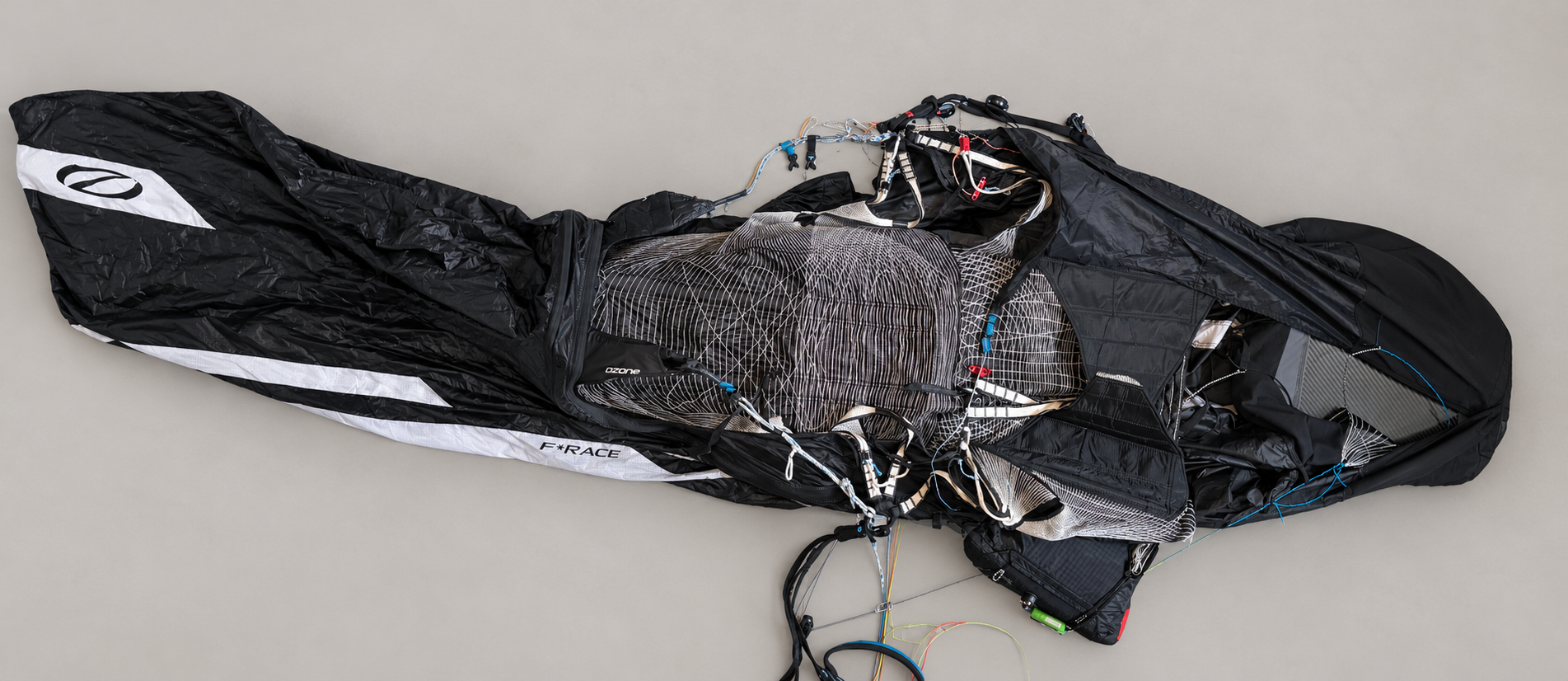
With its low weight and inflatable protector, the F*Race 2 is clearly designed with hike & fly in mind. My setup weighs around 1.85 kg in the configuration I'm using. Thanks to its clever construction, it also packs down incredibly compactly.
Ozone uses a combination of lightweight ripstop fabric and an anatomically arranged Dyneema thread structure in the load-bearing areas. This works surprisingly well for me: the seat and back provide support exactly where the load is carried, without adding unnecessary bulk.
At the front of the pod, a neoprene section absorbs tension and helps keep the ripstop fabric smooth. The tail fairing is also longer than on many previous-generation ultralight harnesses, giving the F*Race 2 a particularly sleek silhouette.
Compared to older Ozone harnesses, the F*Race 2 gives me a very positive impression in terms of build quality and attention to detail. Of course, after just under three months, it's too early to draw any conclusions about long-term durability. However, the materials used should make any potential repairs relatively straightforward.
Preparation and handling on ground
Instead of conventional screw-gate carabiners, the F*Race 2 comes with large soft links. I really like this solution: there are no screw gates to check before every take-off, and the soft connections are less likely to snag on lines or fabric. Anyone who regularly wants to separate the harness from their wing can also replace them with compatible lightweight Petzl carabiners.
The F*Race 2 also surprised me with its storage capacity. The rear pocket is huge, and there's another compartment underneath the seat with enough room for additional equipment, such as a sleeping bag. For a harness in this weight class, that's a major plus in my opinion, especially if you plan to use it not only for XC flying but also for longer vol-biv adventures.
The inflatable protector is filled using the supplied pump, which is pleasantly quiet and can be stowed in the rear pocket on a dedicated loop. Getting into the harness is straightforward: one leg strap is already closed, and the second is secured after stepping in using an easy-to-operate aluminium toggle. The pod and cockpit are then fastened using separate closures, as on most comparable harnesses.
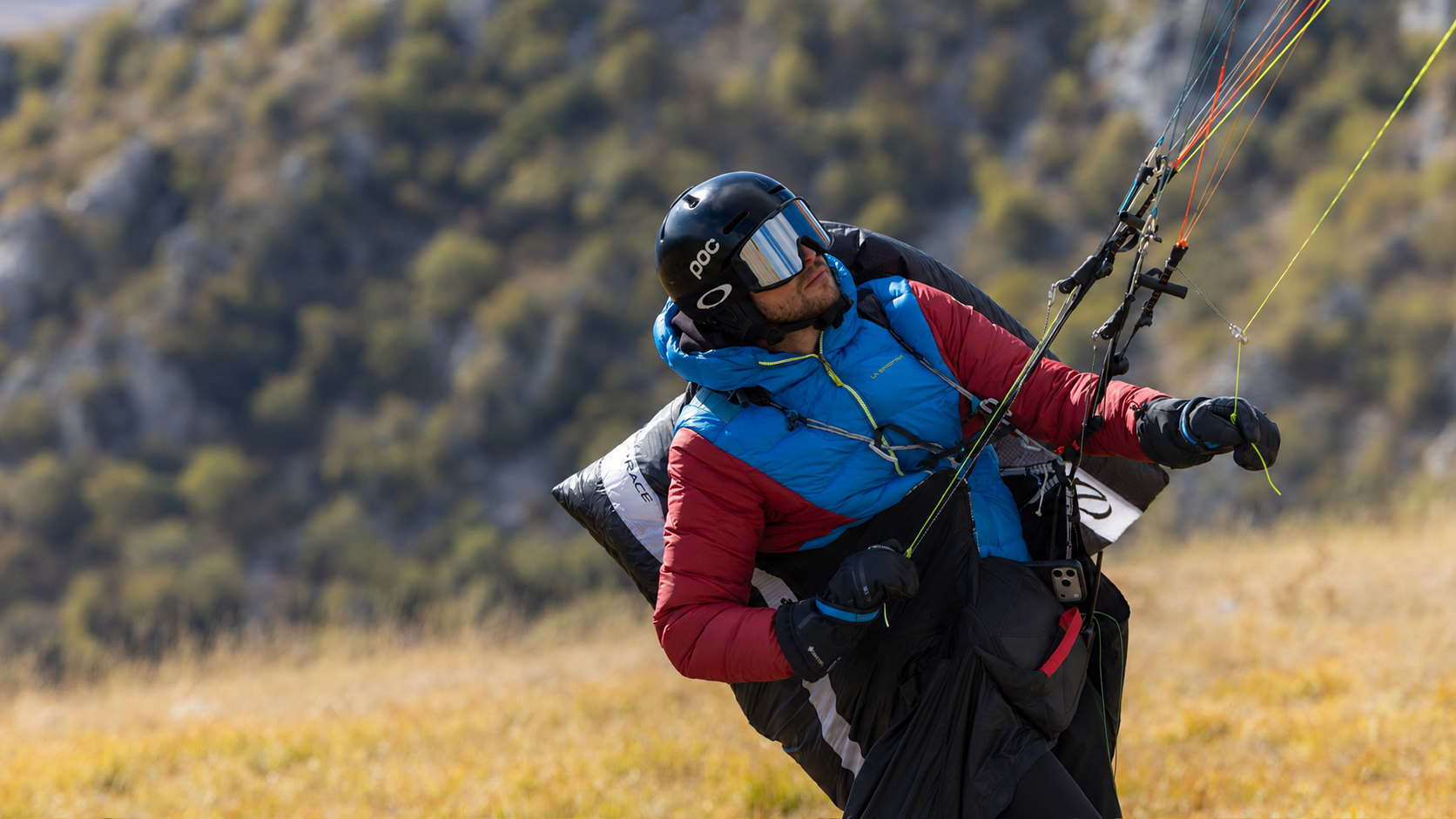
The pod is also easy to reach after take-off. Since I was already used to having a pod puller on my previous Weightless, I quickly added an elastic cord to the footplate. This makes getting into the pod almost instantaneous.
Comfort and in-flight handling
The seating position in the F*Race 2 is fairly reclined. Pilots with little experience of pod harnesses will need some time to get used to it. I found the initial setup quite uncomfortable. However, after a few flights and some adjustments, the harness can be fine-tuned very well. The adjustment straps inside the pod are a little fiddly to work with, but comparable to those on other models.
One feature I particularly appreciate is the ability to adjust the pressure in the inflatable protector in flight via a valve on the right shoulder strap. I find the harness most comfortable when the protector is fully inflated, but not completely taut. It's definitely worth experimenting with the pressure to find your sweet spot.
Once you've found the right position, I find the F*Race 2 exceptionally comfortable. I can spend an entire day on a long XC flight in it without suffering from pressure points or muscle tension the following day.
The cockpit consists of a removable flap with a small snack pocket and an instrument board. The latter provides plenty of space, even for pilots carrying several instruments and a fair amount of tech. One minor drawback, in my opinion, is the press studs used to attach the flap to the Velcro board. They come undone a little too easily for my liking. During soaring sessions involving lots of take-offs and landings, I therefore prefer to remove the flap entirely and use the smaller instrument board directly on the reserve container.
Both side pockets are easily accessible in flight and offer plenty of storage space. During take-off, the front-mounted reserve container hangs fairly low and initially looks as though it might get in the way. In practice, however, it stays neatly tucked to the side and doesn't interfere when getting into the pod.
Safety and aerodynamics
The reserve parachute is housed in a well-integrated front container. The deployment handle is clearly visible and easy to reach. After several test deployments, the container opened without any noticeable resistance. The reserve bridle is connected to the shoulder attachment points. Anything else would be a no-go in my opinion.
The inflatable protector is also generously sized for an ultralight harness. The protected area extends from the thighs up to the middle of the back.
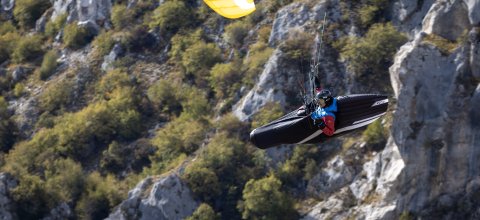
Despite this, the compact construction and narrow profile give the harness a very clean shape. Combined with the longer tail fairing, it creates an aerodynamic profile that seems to make the harness feel very settled in flight and reliably dampens unwanted movements. I haven't been able to demonstrate a measurable performance gain compared to other harnesses, but it certainly feels like I'm getting a few extra kilometres out of every flight ;)
The longer tail fairing has occasionally touched my helmet during stall manoeuvres, but so far it has never come in front of my face or interfered with my hands. Unlike with full-on submarine-style harnesses, this isn't an issue for me with the F*Race. Nevertheless, it's something worth bearing in mind when getting used to the harness.
Conclusion
For me, the Ozone F*Race 2 is a well-thought-out, great-looking and, once properly adjusted, exceptionally comfortable pod harness. It combines low weight and a compact pack size with surprisingly generous storage capacity, a large inflatable protector and a seating position that allows me to enjoy long XC flights without any discomfort.
I find it particularly interesting as an alternative to a full-on submarine harness: you get to enjoy some of the performance benefits without making the same compromises in terms of safety and ease of use.
Of course, the F*Race 2 isn't entirely without compromises. The reclined seating position takes some getting used to, and finding the right setup requires a bit of patience and tweaking. The cockpit attachment could also be more secure. On days involving lots of take-offs and landings, especially top landings, I suspect the removable cockpit flap will end up staying in the backpack sooner rather than later.
Overall, though, I think its advantages clearly outweigh its drawbacks compared to other harnesses in this category. Some pilots will appreciate its ease of use, while others will be drawn to its smooth, stable feel and the performance benefits – even if those are more noticeable by feel than measurable in practice.
It's not a harness I'd recommend to every beginner, but for pilots with some experience, I think it's a very well-rounded package.
Drop by our shop and check it out for yourself. We'd be happy to help you find out whether it's the right harness for you!